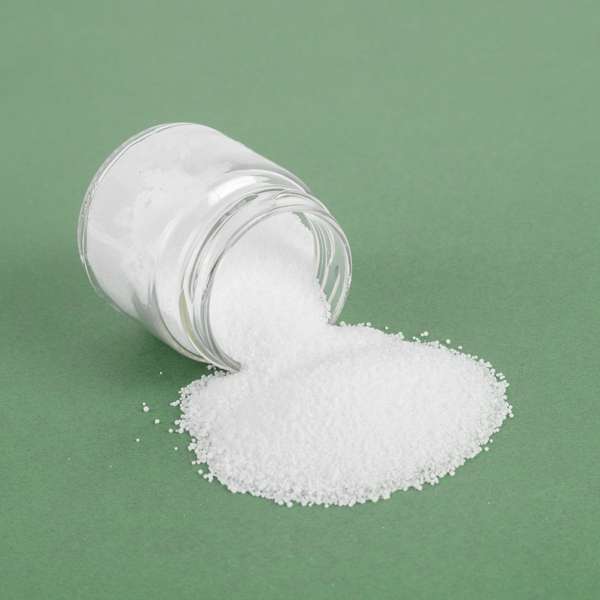
Stearic Acid – Natural Hardening Additive for Candles and Cosmetics
Stearic Acid – Natural Hardening Additive for Candles and Cosmetics - 1 kg is backordered and will ship as soon as it is back in stock.
The more you buy, the more you save
Move up to 25 kg and pay €4,00/kg (51 % less per kg).
Do you want to buy more than 500 kg? Contact us.
The shipping cost will be calculated automatically at checkout.
*The glass container is a decorative item not included in the order.

Secure payment
Visa and Mastercard

Large stock

High quality

24/48h shipping

Stearic Acid – Natural Hardening Additive for Candles and Cosmetics

Description
Description
Main description:
Stearic acid is a saturated fatty acid of vegetable origin used as a hardening additive in candle making and as an emulsifying ingredient in cosmetics.
In small proportions (2-5%), it significantly improves candle hardness, facilitates unmolding, increases opacity, and extends burning time. It is especially useful when working with soft waxes (soy, coconut) and you need more consistency without losing their properties.
In cosmetics, it acts as an emulsifier, thickener, and stabilizer in creams, lotions, and soaps.
✨ Why use stearic acid:
✅ Hardens soft waxes – Adds rigidity without changing properties ✅ Improves unmolding – Reduces mold adhesion ✅ Increases opacity – Whiter, matte candles ✅ Extends burning time – Longer-lasting candles ✅ Vegetable origin – From vegetable oils (palm, coconut) ✅ Multipurpose – Candles + cosmetics + soaps
📊 Technical characteristics:
| Property | Value |
|---|---|
| Main use | Additive for candles, cosmetic emulsifier |
| Format | White flakes / pearls |
| Color | Pure white |
| Melting point | 54-72°C (depending on grade) |
| Origin | Vegetable (palm, coconut) |
| Candle dosage | 2-5% of total wax weight |
| Cosmetic dosage | 1-25% depending on application |
| Storage | Cool, dry place |
🕯️ Uses in candles:
Recommended blends:
- Soy wax: Add 3-5% for firmer molded candles
- Coconut wax: Add 2-4% to improve unmolding
- Soft paraffin: Add 3-5% to increase hardness
- Vegetable blends: 2-5% as needed
Benefits in candles:
- Easier to unmold molded candles
- Greater opacity and matte finish
- Slower burning (candles last longer)
- Better fragrance retention in vegetable waxes
🧴 Uses in cosmetics:
- Creams and lotions: Emulsifier and thickener (2-5%)
- Soaps: Hardener and foaming agent (1-3%)
- Balms: Firmer texture (5-15%)
- Solid sticks: Structural base (15-25%)
🛠️ How to use stearic acid in candles:
1. Calculate amount Use 2-5% of the total wax weight. Example: for 1kg of soy wax, add 30-50g of stearic acid.
2. Melt together with the wax Add stearic acid directly with the wax when melting. It fully integrates as it melts.
3. Mix well Stir to ensure even distribution.
4. Follow normal process Continue with your usual process (adding fragrance, pouring, etc.).
💡 Professional tips:
⚠️ Do not exceed 5% – More can make the candle brittle and hinder burning ⚠️ Increases opacity – If you want translucent candles, do not use or reduce to 1-2% ⚠️ Improves adhesion to glass – Useful in soy wax to reduce container peeling ⚠️ Cosmetic grade – If using in cosmetics, ensure it is cosmetic/food grade
❓ Frequently Asked Questions:
Is it the same as stearine? Not exactly. Stearine is a mixture of fatty acids (stearic + palmitic). Pure stearic acid is more specific and predictable.
Can I use it in soy container candles (BPF)? Not recommended. BPF is already formulated to adhere to glass. Adding stearic acid can cause peeling and cracking.
Does it change the candle's color? Yes, it increases opacity and makes the candle whiter/matte. If you want vibrant translucent colors, use it sparingly.
Does it affect the candle's scent? Does not negatively affect. In fact, it can slightly improve fragrance retention by hardening the wax.